Ingredients
Equipment
Method
Prepare the Dough
- In a large mixing bowl, combine the warm water, sourdough discard, active dry yeast, and granulated sugar (if using). Stir gently and let sit for 5-10 minutes until the yeast is foamy. This indicates the yeast is active.
- Add the flour and salt to the wet ingredients. Mix with a sturdy spoon or your hands until a shaggy, cohesive dough forms and there are no dry streaks of flour. It will be sticky.
First Rise (Bulk Fermentation)
- Lightly grease the same bowl (or a clean one) with olive oil. Place the dough in the greased bowl, turning it once to coat. Cover the bowl tightly with plastic wrap or a damp kitchen towel.
- Let the dough rise in a warm spot for 2-3 hours, or until it has visibly increased in size and looks bubbly. The exact rise time will depend on your room temperature and the activity of your discard.
Shape the Loaf
- Gently turn the dough out onto a lightly floured surface. Using a bench scraper or your hands, gently fold the edges of the dough towards the center a few times to create a round shape with some tension on the surface. Avoid overworking the dough.
- If using a Dutch oven, cut a piece of parchment paper slightly larger than your dough. Carefully place the shaped dough onto the parchment paper. If not using a Dutch oven, you can place it directly on a baking sheet lined with parchment.
Second Rise (Proofing)
- Cover the dough loosely with plastic wrap or an inverted bowl. Let it proof for another 30-60 minutes, or until it looks puffy but not overly gassy. You can perform the 'poke test': gently poke the dough with a floured finger; if it slowly springs back, it's ready.
Bake the Bread
- About 30 minutes before the end of the second rise, preheat your oven to 450°F (230°C). If using a Dutch oven, place it with its lid in the oven to preheat. If not using a Dutch oven, place a baking sheet in the oven and an empty, oven-safe tray on the bottom rack.
- Once the oven is preheated and the dough is proofed: Carefully remove the hot Dutch oven from the oven. Using the parchment paper as a sling, carefully transfer the dough into the hot Dutch oven. Score the top of the dough with a sharp knife or razor blade (a simple cross or slash works well).
- If not using a Dutch oven: Carefully transfer the dough on its parchment to the preheated baking sheet. Pour about 1 cup of hot water into the empty tray on the bottom rack (this creates steam for a crispy crust).
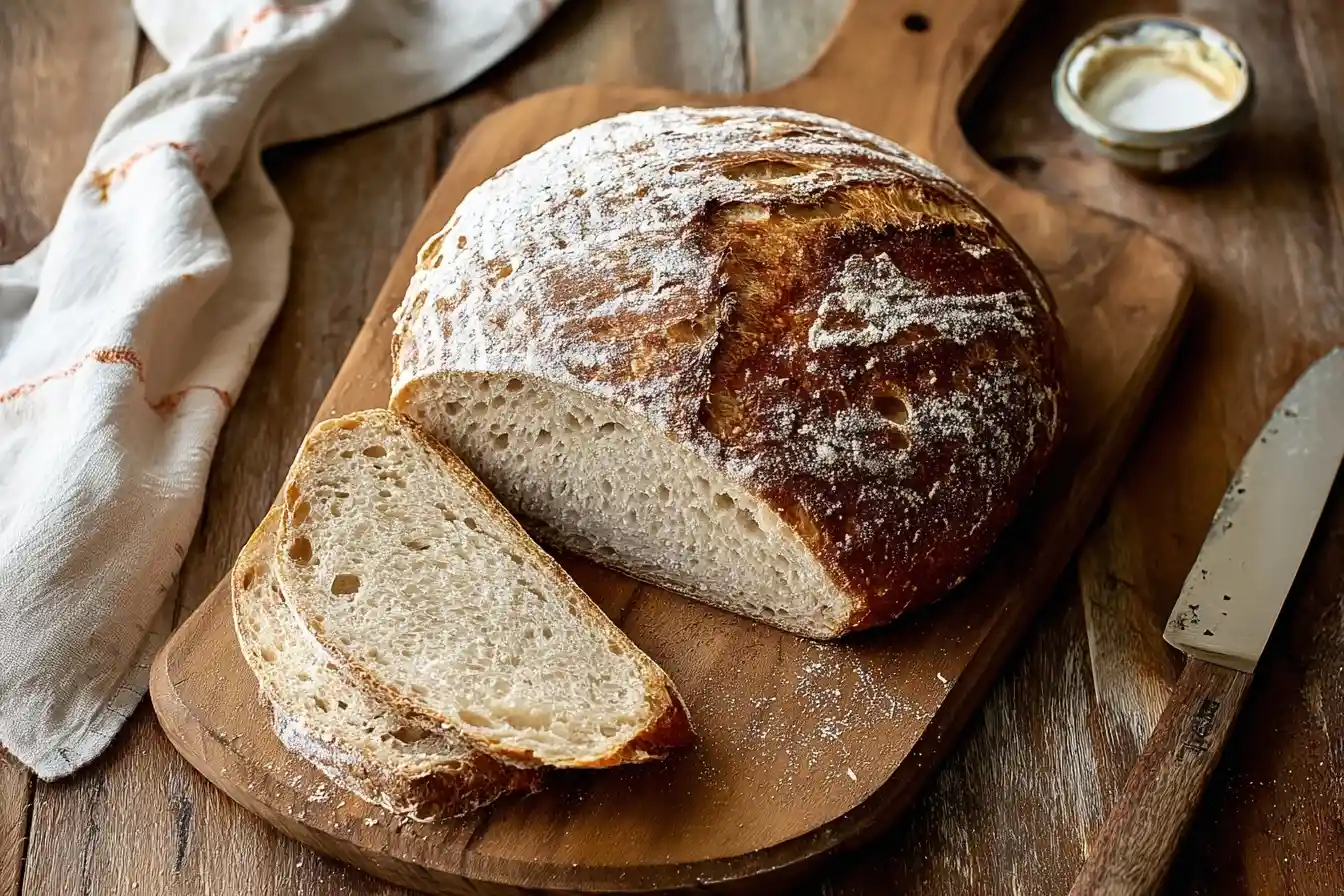
- Bake with the lid on (or with steam) for 30 minutes. Then, remove the lid (or the water tray) and continue baking for another 10-15 minutes, or until the crust is deep golden brown and sounds hollow when tapped on the bottom.
- Carefully remove the bread from the Dutch oven (or baking sheet) and transfer it to a wire rack to cool completely before slicing. This is crucial for the internal crumb structure.
Notes
Using a kitchen scale provides the most accurate measurements for baking. Cooling the bread completely before slicing is essential for the best texture. Store leftover bread at room temperature in an airtight container or bread bag for up to 3-4 days. You can also slice and freeze it for longer storage.