Ingredients
Equipment
Method
Activate the Yeast
- In a large mixing bowl, combine the warm water, active dry yeast, and a pinch of granulated sugar. Stir gently and let sit for 5-10 minutes until the yeast is foamy. This indicates the yeast is active.
Mix the Dough
- Add 3 cups of all-purpose flour and fine sea salt to the yeast mixture. Using a wooden spoon or your hands, mix until a shaggy, sticky dough forms and all the flour is incorporated. There's no need for extensive kneading at this stage.
First Rise (Bulk Fermentation)
- Lightly grease a clean large bowl with olive oil. Transfer the dough to the greased bowl, turning it once to coat. Cover the bowl tightly with plastic wrap or a clean kitchen towel. Let the dough rise in a warm place for 1.5 to 2 hours, or until it has doubled in size.
Shape the Dough
- Gently turn the dough out onto a lightly floured surface. Using floured hands, gently press the dough into a rough round or rectangle. Fold the edges towards the center to create tension on the surface, forming a tight ball. Avoid overworking the dough to maintain its airy structure.
Second Rise
- Place a sheet of parchment paper into a proofing basket (banneton) or a bowl lined with a floured kitchen towel. Transfer the shaped dough, seam-side up, onto the parchment paper. Cover loosely with plastic wrap or another towel and let it rise for another 30-45 minutes, or until visibly puffy.
Preheat Oven and Dutch Oven
- About 30 minutes before the end of the second rise, preheat your oven to 450°F (230°C) with your 5-6 quart Dutch oven (with its lid) inside. Allow the Dutch oven to heat thoroughly for at least 30 minutes.
Bake the Bread
- Carefully remove the hot Dutch oven from the oven. Using the parchment paper as a sling, gently lower the dough into the hot Dutch oven. If desired, lightly score the top of the dough with a sharp knife or bread lame (a single deep slash or a few parallel slashes).
- Cover the Dutch oven with its lid and return it to the hot oven. Bake for 30 minutes with the lid on.
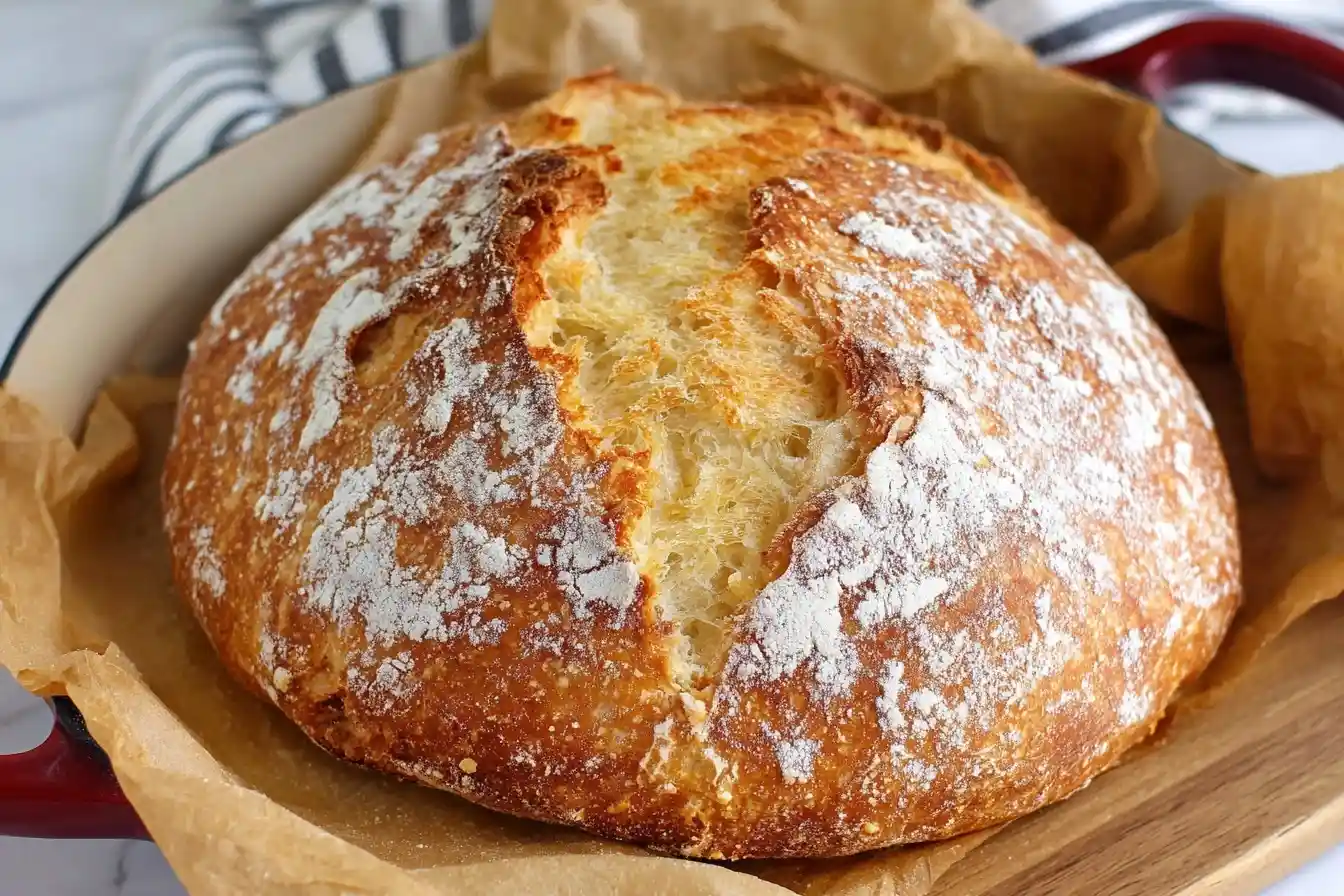
- Remove the lid and continue to bake for another 10-15 minutes, or until the crust is deeply golden brown and crunchy. The internal temperature of the bread should be around 200-210°F (93-99°C).
Cool and Serve
- Carefully lift the bread out of the Dutch oven using the parchment paper and transfer it to a wire cooling rack. Allow the bread to cool completely for at least 1 hour before slicing. This is crucial for the internal crumb to set and for the crust to remain crisp.
Notes
For an even chewier crust, you can spray a little water on the dough before baking or add a few ice cubes to the bottom of the Dutch oven (carefully!) before covering. Store leftover bread in a paper bag at room temperature for up to 2-3 days, or freeze sliced for longer storage. Reheat crusty bread in a toaster or oven for best results.